
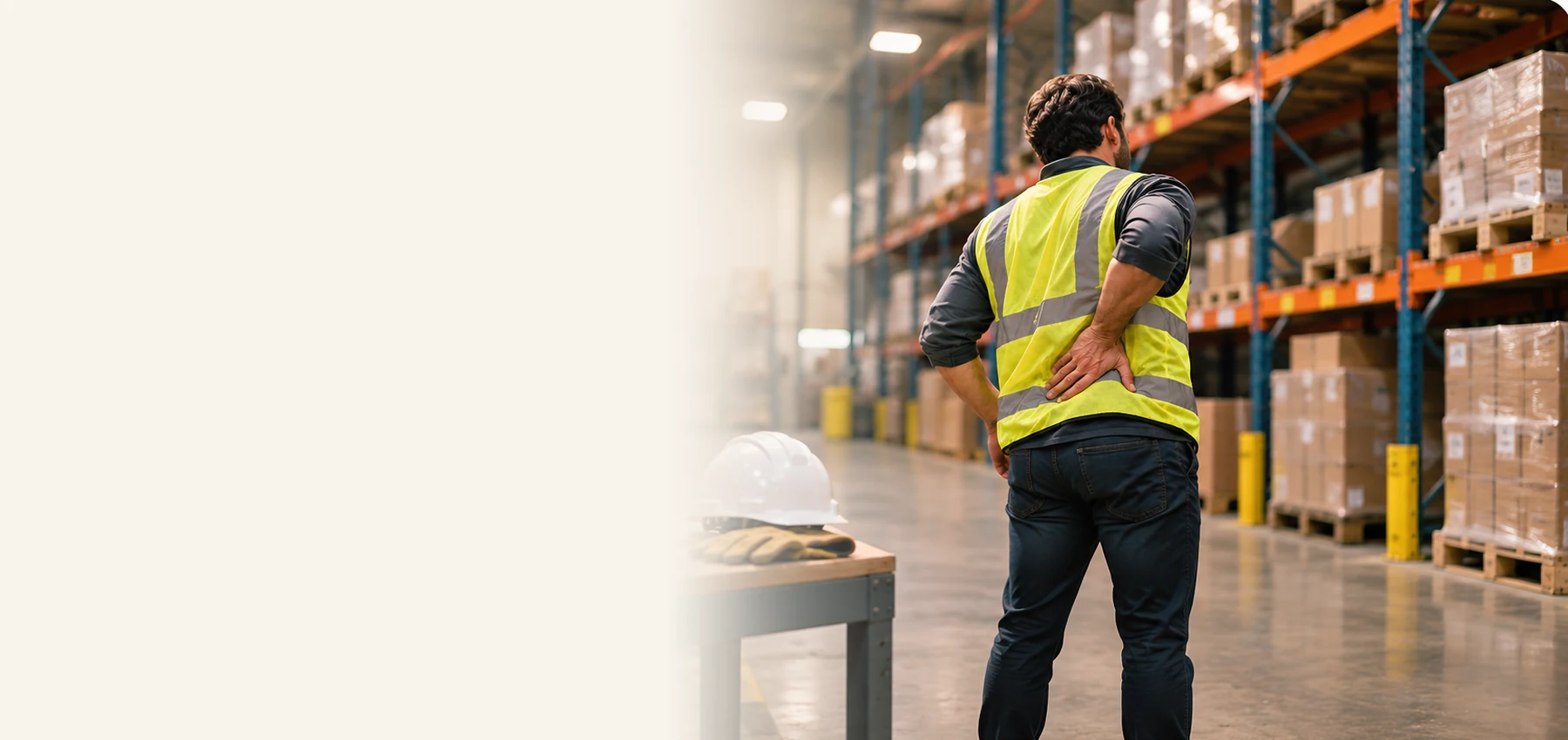
What are work-related injuries?
A work-related injury is an injury or health problem caused or made worse by your job. It may develop after a single incident or gradually through repeated tasks.
Whether you work at a desk, drive, care for patients, use tools, or lift and move materials, your job places different demands on your body.
How do work injuries happen?
A sudden movement or accident
Lifting a heavy load, twisting while carrying something, pushing, pulling, slipping, or falling can cause an injury. Workplace vehicle accidents and being struck by an object can also lead to injuries.
Repeated strain over time
Repeated lifting, reaching, typing, gripping, or using tools can place stress on muscles, tendons, and nerves. Awkward working positions, forceful movements, vibrating equipment, and limited recovery time can also contribute.
Common symptoms of work-related injuries
Back pain
Aching or sharp discomfort when lifting, bending, carrying, or standing back up. Pain may stay in your back or travel into your buttock or leg.
Neck and shoulder discomfort
Tightness, aching, or soreness during or after computer work, driving, repeated reaching, or working in an uncomfortable position.
Pain when reaching or lifting
Shoulder or arm discomfort when reaching overhead, lifting objects, or carrying a load.
Wrist, hand, or elbow pain
Aching or soreness when typing, using a mouse, gripping tools, or repeating the same hand movements.
Numbness or tingling
Pins and needles or reduced feeling in a hand, arm, leg, or foot—even if it comes and goes.
Weakness or difficulty gripping
Dropping objects, struggling to hold tools, or finding that familiar tasks take more effort than before.
Swelling or tenderness
An area may look swollen, feel sore to the touch, or hurt when you use it.
Stiffness or difficulty moving
Turning your head, raising an arm, reaching, or bending may feel tight, restricted, or uncomfortable.